Commercial Overhead Door Maintenance Checklist for Businesses
For businesses in McKinney, Frisco, Allen, and across Collin County, a commercial overhead door is one of the hardest-working assets on the property. Whether you operate a warehouse, auto shop, loading dock, or retail facility, these doors open and close dozens — sometimes hundreds — of times every single day. That kind of constant use, combined with North Texas heat, humidity swings, and occasional severe weather, accelerates wear on every moving component.
A proactive commercial overhead door maintenance checklist for businesses is the single best way to avoid unexpected failures, protect employees from safety hazards, and extend the service life of your investment. This guide walks you through exactly what to inspect, how often to do it, and which tasks should always be left to a licensed professional.
Why Preventive Maintenance Matters for Commercial Doors
Unplanned door failures can grind operations to a halt. A stuck loading dock door means delayed shipments. A door that won't close creates a security vulnerability. In Texas summers, a malfunctioning seal lets conditioned air escape and spikes your energy bills. Preventive maintenance reduces these risks dramatically, and studies within the facility management industry consistently show that proactive maintenance costs a fraction of emergency repair or full replacement.
Monthly Maintenance Tasks
Visual Inspection of All Components
Once a month, walk the full perimeter of each commercial overhead door and look for obvious red flags. Check for dents, warping, or rust on door panels. Examine cables for fraying, kinking, or signs of uneven tension. Look at rollers and see if any are cracked, worn flat, or missing bearings. Inspect the bottom seal and side weatherstripping for tears or gaps — in North Texas, a compromised seal lets in summer heat, winter cold drafts, and pests.
Test the Auto-Reverse and Safety Sensors
Place a 2x4 flat on the ground in the door's path and activate the close cycle. A properly functioning commercial door should reverse immediately upon contact. Also wave an object through the photo-eye beam while the door is closing to verify the sensor triggers a reversal. OSHA requires commercial powered doors to have functional reversing mechanisms, so document these tests for your safety records.
Listen and Watch During Operation
Run the door through several full open-and-close cycles and pay close attention. Grinding or scraping sounds often point to dry rollers or debris in the tracks. A door that jerks or moves unevenly may have a broken or weakening spring. Any popping or banging noise warrants an immediate professional evaluation, especially if your building uses high-cycle torsion springs common on commercial roll-up doors.
Quarterly Maintenance Tasks
Lubricate All Moving Parts
Every three months, apply a quality silicone-based spray or white lithium grease to rollers, hinges, track brackets, and the torsion spring shaft bearing plates. Avoid using WD-40 as a long-term lubricant — it evaporates quickly and can attract dust, which is especially problematic in the dusty, dry conditions common across Collin County. Do not apply lubricant inside the tracks themselves, as this can cause rollers to slip and the door to derail.
Inspect and Tighten Hardware
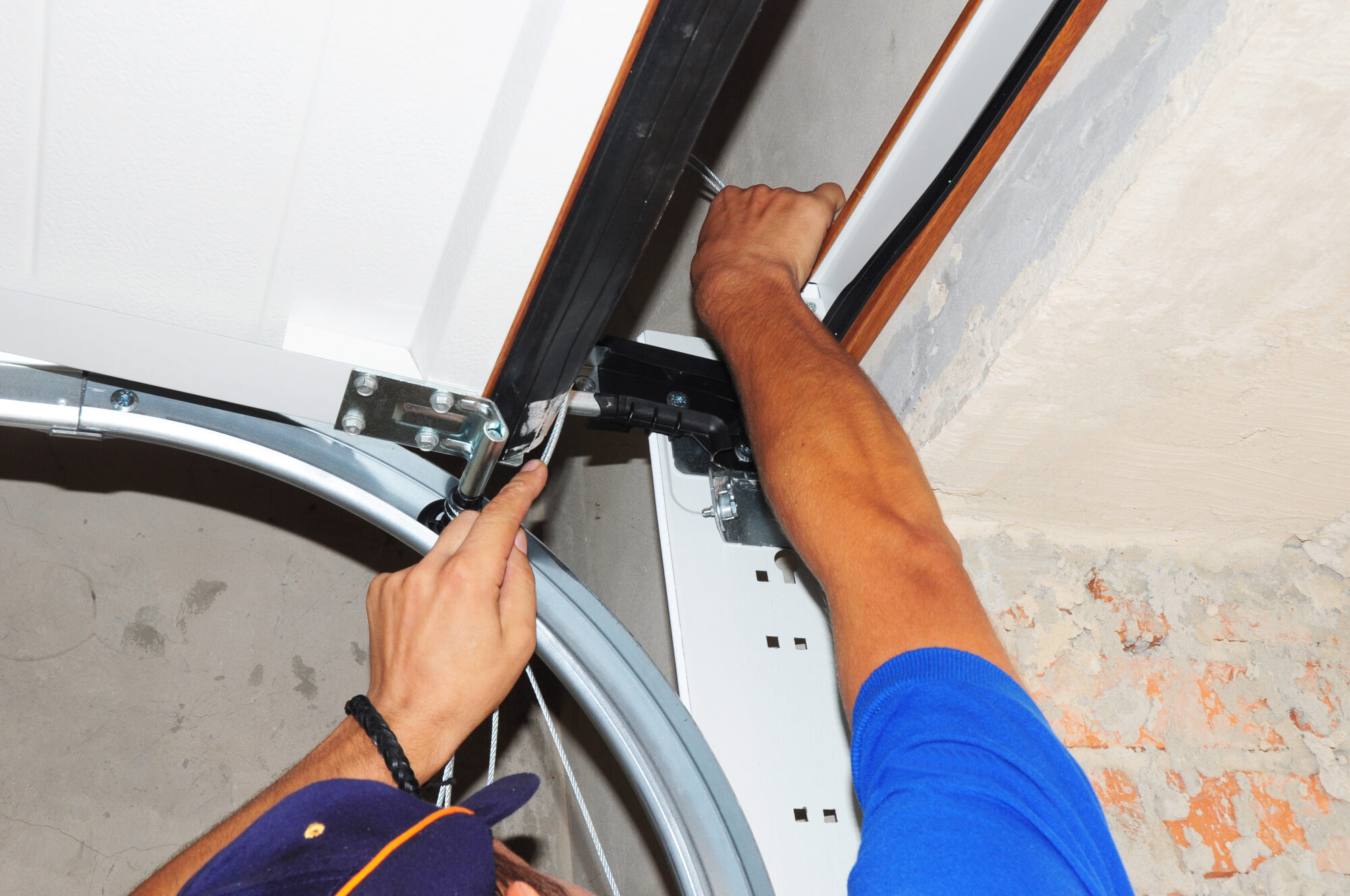
The vibration of hundreds of daily cycles gradually loosens bolts, nuts, and roller brackets. Use a socket wrench to check all hardware along the door tracks and mounting brackets. Pay special attention to the bolts securing the torsion spring assembly and the anchor bracket at the center of the header. Loose hardware is one of the most common and most preventable causes of premature component failure on commercial overhead doors.
Check the Door Balance
Disconnect the door opener by pulling the emergency release cord, then manually lift the door to about waist height and let go. A properly balanced door should stay in place with minimal drift. If it falls quickly or shoots upward, the spring tension is off. An unbalanced door forces the commercial opener motor to work harder, dramatically shortening its lifespan and increasing your energy consumption.
Annual Professional Inspection Checklist
Beyond the tasks your maintenance team handles internally, every commercial overhead door should receive a comprehensive professional inspection at least once per year — ideally twice for high-traffic doors. A trained technician will perform a full torsion or extension spring assessment, measure track alignment with precision tools, test motor amp draw on the opener, inspect the cable drum and winding cones, evaluate the condition of the bottom brackets (which are under extreme tension and should never be adjusted by untrained personnel), and check all safety reversal systems against current ANSI/DASMA standards. In North Texas, scheduling one of these visits before summer is smart, since extreme heat accelerates grease breakdown and can cause weatherstripping to crack.
When to Call McKinney Overhead Door
Some maintenance tasks are well within reach for a diligent facilities team, but others carry serious injury risk and should always be handled by a licensed commercial door professional. If you notice broken or visibly damaged torsion springs, frayed lift cables, a bent track that has caused the door to jump off its rollers, or an opener that is burning out motors repeatedly, stop using the door and call McKinney Overhead Door at (972) 222-2345. Our team serves businesses throughout McKinney, Frisco, Allen, Plano, and the broader Collin County area with same-day commercial service calls. We stock commercial springs, rollers, cable drums, and opener components for most major door brands, so we can resolve most issues in a single visit and get your operations back on schedule.
Keeping a Maintenance Log
Document every inspection, lubrication, hardware check, and repair in a dedicated maintenance log for each door on your property. Include the date, the technician or employee who performed the work, what was found, and what action was taken. This record-keeping habit serves multiple purposes: it helps you spot recurring problems with a specific door, provides documentation for insurance claims or OSHA inquiries, and gives you a clear picture of when a door is approaching end-of-life and budgeting for replacement makes more financial sense than continued repairs.
Build a Maintenance Schedule That Works for Your Business
Every business has different operational demands. A single commercial overhead door at a small auto shop has different needs than a row of ten high-cycle dock doors at a distribution center. Use this commercial overhead door maintenance checklist for businesses as your baseline, then adjust frequency based on your door's daily cycle count, age, and the results of your ongoing inspections. Partnering with a reliable local service provider like McKinney Overhead Door for your annual professional inspections ensures that an expert set of eyes catches what routine walkthroughs miss — keeping your doors safe, compliant, and running efficiently year-round.
Frequently asked questions
Need professional help?
Contact McKinney Overhead Door for fast, reliable service and a free estimate.