
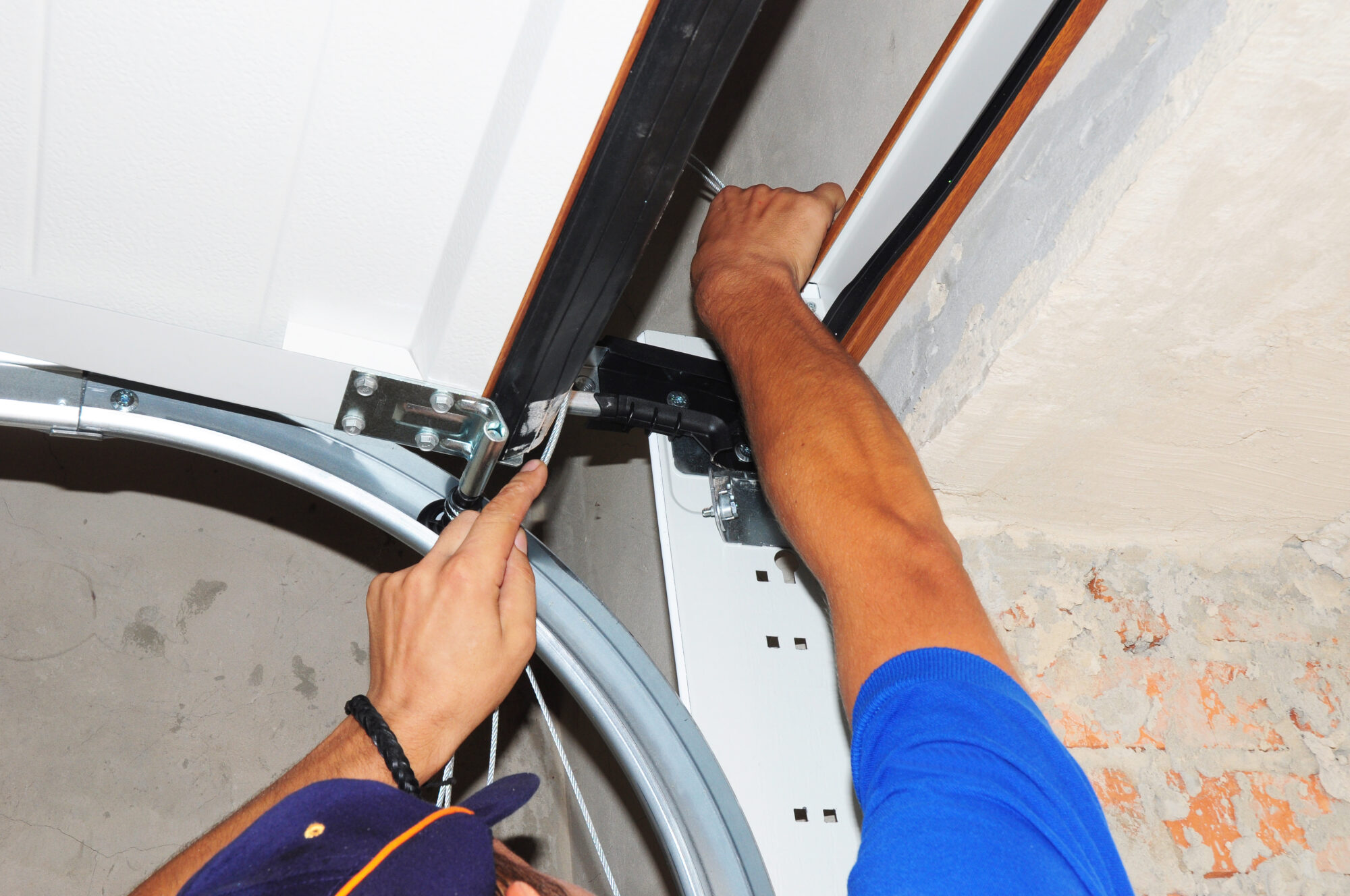
Spring Repair
Garage Door Spring Repair in McKinney, TX
A broken garage door spring can trap your car inside, leave your home unsecured, or cause serious injury if handled incorrectly. McKinney Overhead Door provides professional torsion and extension spring replacement for homeowners and business owners across McKinney and the surrounding area—available 24/7 for emergencies.
Get a Free EstimateSprings are the true workhorse of any garage door system. Every time the door travels up or down, the springs absorb and release stored energy to counterbalance hundreds of pounds of moving steel, wood, or composite panels. Most homeowners never think about their springs until the morning the door refuses to budge or, worse, a spring snaps with a loud bang in the middle of the night. At McKinney Overhead Door, spring repair is one of the most common calls we receive, and for good reason—springs have a finite lifespan, and McKinney's temperature swings between cold winter nights and scorching Texas summers accelerate the wear cycle faster than manufacturers' standard estimates.
Understanding what type of springs your door uses, how long they are designed to last, and what the warning signs of imminent failure look like can help you act before a break strands your vehicle or creates a safety hazard. This page walks you through everything you need to know about garage door spring systems—from the mechanics of torsion versus extension springs, to why DIY replacement is genuinely dangerous, to what our technicians check during every service call. If you already know you need help, call us at (972) 222-2345 for a free on-site estimate.
Torsion Springs vs. Extension Springs: What's the Difference?
Most residential and light-commercial garage doors in the McKinney area use one of two spring configurations. Torsion springs mount horizontally above the door opening on a metal shaft. When the door closes, the spring winds tighter, storing rotational energy. When the door opens, that energy unwinds through the shaft and drums to lift the door. A single torsion spring handles most standard doors; heavier or wider doors typically use two springs on the same shaft for balanced lifting power.
Extension springs run along the horizontal tracks on either side of the door opening. As the door closes and descends, these springs stretch and store energy through tension rather than rotation. They are often paired with safety cables threaded through the coils—a critical detail, because an extension spring without a safety cable becomes a dangerous projectile if it snaps under load. While extension spring systems are common in older homes and lower-profile garages, torsion systems have become the preferred standard because they distribute load more evenly, last longer, and fail in a more controlled manner.
- Torsion springs: mounted above the door, wind/unwind on a central shaft, suitable for most door weights and sizes
- Extension springs: mounted along side tracks, stretch under tension, must always be paired with safety cables
- Double torsion setups: recommended for doors wider than 16 feet or heavier custom doors
- Torquemaster systems: springs housed inside the torsion shaft—require specialized tools and training to service safely
Cycle Ratings and Why Springs Break
Every garage door spring is rated for a specific number of cycles, where one cycle equals one complete open-and-close movement. Standard residential springs are typically rated for around 10,000 cycles. A household that uses the garage door four times per day will reach that threshold in roughly seven years. High-cycle springs—rated for 25,000 or even 100,000 cycles—are available and are particularly worth considering for busy households or commercial applications where the door moves dozens of times daily.
Springs break for a combination of reasons beyond just reaching their cycle limit. Rust and corrosion thin the wire coils over time, especially in older doors that lack routine lubrication. Improper spring sizing—either the wrong wire diameter, the wrong overall length, or an incorrect winding—places uneven stress on the coil and shortens its usable life. Temperature extremes matter too: metal contracts in cold weather, making a spring that was already near the end of its life more prone to snapping on a cold January morning. Finally, a door that is out of balance forces one spring to work harder than the other, creating an uneven wear pattern that causes premature failure on the overloaded side.
Warning Signs Your Springs Need Attention Now
Catching spring wear before a complete break gives you the luxury of scheduling a repair at a convenient time rather than dealing with an emergency. Watch for these signals and call a technician when you notice them.
A door that opens unevenly—rising higher on one side than the other—is a classic indicator of unbalanced spring tension. If you disconnect the automatic opener and try to lift the door manually, a properly balanced door should rise smoothly and stay open at about waist height without assistance. If it feels unusually heavy, crashes down when released, or only stays open if you hold it, the springs are likely worn or broken. Visible gaps in a torsion spring coil, rust streaking along the coils, or a squealing sound during operation are all signs that service is overdue. An extension spring that appears noticeably stretched or elongated compared to the other side has lost its tension and needs replacement before it fails completely.
- Door feels unusually heavy when lifted manually
- Door rises crooked or higher on one side
- Visible gap or separation in a torsion spring coil
- Loud bang from the garage—often the sound of a spring breaking
- Rust, flaking, or discoloration on spring coils
- Opener motor strains or reverses without completing the cycle
- Extension spring appears stretched or elongated
Why DIY Spring Replacement Is Genuinely Dangerous
We want to be straightforward with you: garage door spring replacement is one of the few home repairs where the risk of serious injury is high enough that we strongly advise against attempting it yourself. A standard torsion spring stores a significant amount of mechanical energy when wound. Releasing that energy in an uncontrolled way—through a slipped winding bar, an improper tool, or a miscalculation—can cause the spring to snap violently, or the winding bars to fly free with enough force to cause broken bones, lacerations, or eye injuries.
Beyond the immediate physical danger, correct spring replacement requires precise knowledge of wire diameter, inside diameter, overall length, and wind direction. Using a spring that is even slightly undersized for your door's weight will result in a door that is permanently out of balance, shortening the life of your opener, cables, rollers, and the new springs themselves. Oversized springs create the opposite problem, making the door dangerously light and prone to flying open unexpectedly. Our technicians carry a wide inventory of springs and use calibrated measurements to match the exact specification your door requires—something that is difficult to replicate without professional tools and experience.
Our Spring Repair Process, Step by Step
When a McKinney Overhead Door technician arrives at your home or business—whether you're in McKinney, Allen, Frisco, Prosper, Melissa, Princeton, Fairview, or Plano—the first step is a thorough inspection of the entire door system, not just the springs. Spring failures often happen alongside or because of other worn components, and addressing only the spring while ignoring frayed cables, worn drums, or a misaligned track leads to a repeat service call sooner than necessary.
After the inspection, the technician will measure the existing springs or the door itself to determine the precise spring specification needed: wire size, inside diameter, length, and wind direction. For a broken torsion spring, the old spring is carefully unwound using proper winding bars before it is removed from the shaft. New springs are installed, wound to the correct tension, and the door is test-cycled and balanced. The technician adjusts cable tension and checks that the door sits level at all points in its travel. For extension spring systems, safety cables are inspected and replaced if worn. The entire service is completed with the door reconnected to the opener and tested under both automatic and manual operation.
- Step 1: Full door system inspection—springs, cables, drums, rollers, tracks, and opener
- Step 2: Precise measurement of spring specifications required for the door's weight and size
- Step 3: Safe removal of old or broken springs using calibrated winding bars and proper technique
- Step 4: Installation of correctly sized replacement springs
- Step 5: Winding torsion springs to proper tension; verifying extension spring cable condition
- Step 6: Door balance test—door should hold position at waist height when disconnected from opener
- Step 7: Full operational test under automatic and manual modes; lubrication of all moving parts
Repair vs. Replace, and Converting from Extension to Torsion
When one spring breaks, the natural question is whether to replace just the broken spring or both at the same time. If both springs were installed at the same time and have the same number of cycles on them, replacing only the broken one leaves you with a mismatched pair—one fresh spring and one that is likely approaching the end of its life. In most cases, replacing both springs during the same service call is the practical choice because it restores balanced tension, avoids a second service call in the near future, and is more economical in the long run.
Many older McKinney-area homes were built with extension spring systems, which were the industry standard for decades. If your extension springs have broken multiple times or your garage has the vertical clearance to accommodate a torsion shaft, converting to a torsion system is worth considering. Torsion springs last longer, provide smoother and more balanced door operation, and are inherently safer because the shaft constrains the spring if it breaks. Conversion involves installing a new torsion shaft, drums, and cables in addition to the springs, and our technicians can walk you through whether your specific door and garage configuration make it a worthwhile upgrade during your free estimate.
What Affects the Cost of Garage Door Spring Repair
Spring repair costs vary from job to job because several technical factors influence the scope of work involved. The most direct factor is the type and specification of spring required—heavy doors, oversized doors, and high-cycle upgrades all require heavier-duty components than a standard residential door. Whether you are replacing one spring or two, and whether you are converting from extension to torsion, also affects the overall scope. If the inspection reveals that cables, drums, or other hardware are worn and need replacement alongside the springs, those components factor into the total as well.
Labor complexity matters too. A straightforward torsion spring swap on a standard single-car door is a different job than a two-spring replacement on a heavy wood carriage-house door with worn drums and frayed cables. Emergency or after-hours service calls may carry a different rate than standard daytime appointments. The clearest way to understand what your specific repair will involve is to let one of our technicians see the door in person. We provide free on-site estimates with no obligation, so you will know exactly what the job entails and what it will cost before any work begins.
- Spring type: torsion vs. extension, and the specific wire size and length required
- Number of springs: single spring replacement vs. replacing both at the same time
- Cycle rating of replacement springs: standard vs. high-cycle upgrades
- Door weight and size: heavier or wider doors require heavier-duty springs
- Additional hardware: cable, drum, or bearing plate replacement if inspection reveals wear
- Extension-to-torsion conversion: additional components and labor involved
- Time of service: standard appointment vs. after-hours emergency call
- Free on-site estimate available—call (972) 222-2345 to schedule
FAQs
Spring Repair questions
Visit or call
McKinney Overhead Door
8720 Silverado Trail, Suite 104, McKinney, TX 75070
Open 24/7 · Emergency Service · (972) 222-2345
Get DirectionsFree Estimates · Same-Day Options
Schedule your free estimate
Call (972) 222-2345 — available 24/7 for emergencies.