
Safety guide
Garage Door Spring Safety: A Guide for North Texas Homeowners
Garage door springs are among the most mechanically stressed components in a home, and a sudden failure can cause serious injury or property damage. Understanding how they work — and what warning signs to watch for — is the first step toward keeping your household safe.
Published by McKinney Overhead Door · Updated 2026-10-28
- Torsion and extension springs store powerful mechanical energy; a break releases that energy instantly and violently.
- Visible gaps in a torsion spring coil, squeaking, or a door that feels unusually heavy are warning signs you should not ignore.
- If a spring breaks, stop using the door immediately — do not attempt to open it manually or with the opener.
- DIY spring replacement is one of the most injury-prone garage door tasks; it requires specialized tools and training.
- Monthly balance and auto-reverse tests take less than five minutes and can alert you to a developing problem before it becomes dangerous.
Most homeowners give little thought to the springs above their garage door until something goes wrong. Yet those springs are under enormous tension every single day, silently doing the work of counterbalancing a door that can weigh anywhere from 130 to more than 400 pounds. When a spring is healthy and properly adjusted, the door feels almost weightless. When a spring fails unexpectedly, that weight becomes an immediate hazard.
This guide is written for homeowners across the North Texas area — including McKinney, Frisco, Allen, and surrounding communities — who want straightforward, honest information about garage door spring safety. It is not a how-to manual for DIY repairs. It is an educational resource designed to help you recognize problems early, respond safely when something breaks, and make informed decisions about professional service.
How Garage Door Springs Store and Release Energy
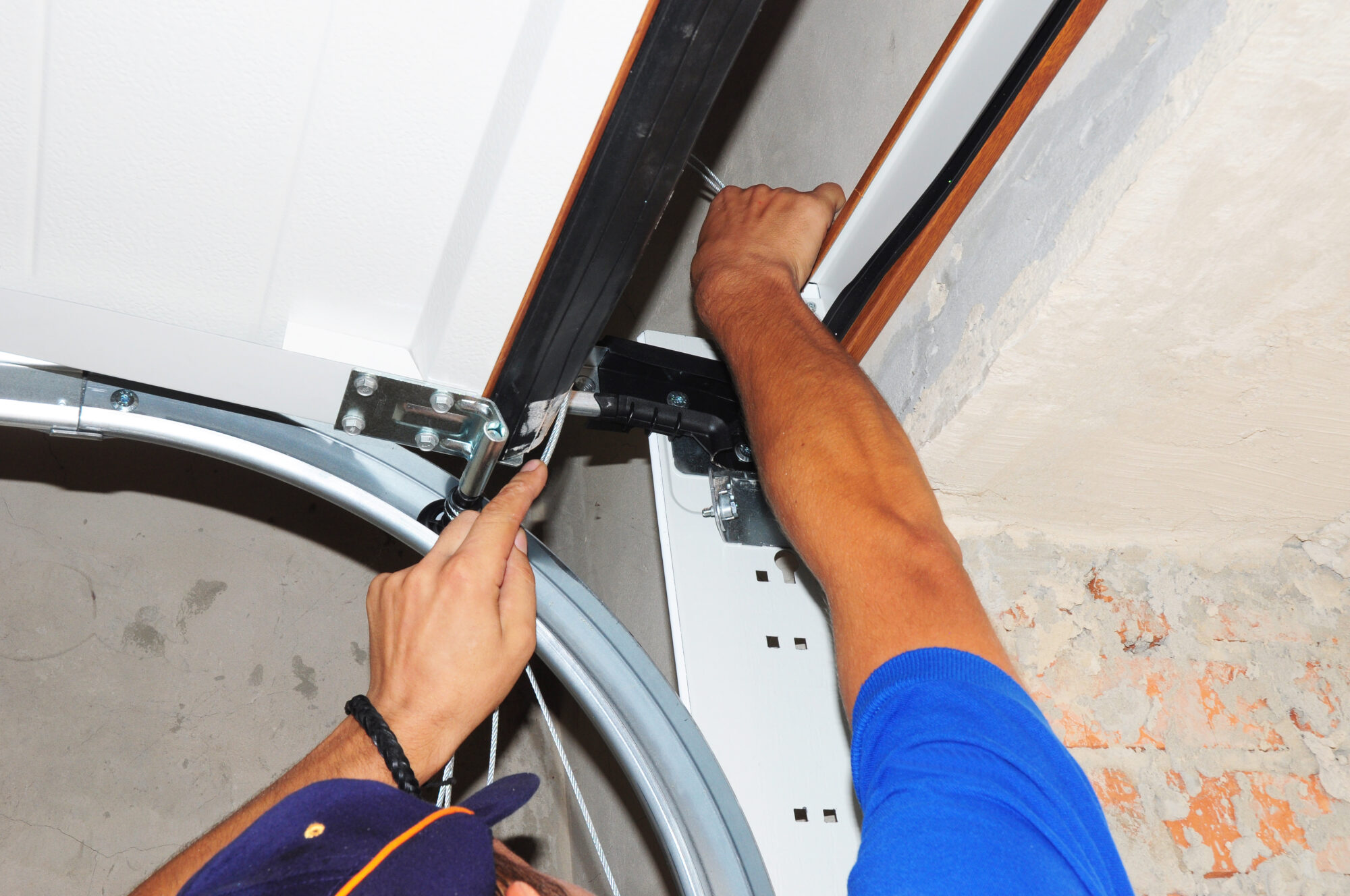
There are two main spring systems used on residential garage doors: torsion springs and extension springs. Torsion springs are mounted horizontally on a metal shaft directly above the door opening. As the door closes, the spring winds tighter, storing rotational energy. When the door opens, that stored energy unwinds and assists the opener or your arms in lifting the door.
Extension springs run along the horizontal tracks on either side of the door. They stretch — extend — when the door closes, storing energy through elongation rather than rotation. When the door opens, they contract and help pull the door upward.
Both systems are under significant mechanical stress every time the door moves. Springs are rated by cycle life, meaning the number of open-and-close cycles they are engineered to handle before metal fatigue sets in. A standard spring may be rated for around 10,000 cycles, while higher-quality options can reach 25,000 or more. A family that opens and closes the garage door four times a day will reach 10,000 cycles in roughly seven years — sometimes sooner in demanding conditions.
Why Spring Failures Cause Injuries
When a torsion spring snaps, it releases its stored rotational energy in a fraction of a second. The loud bang that results is often mistaken for a gunshot by neighbors. Fragments of a broken spring or hardware can become projectiles. A door that loses spring tension mid-travel can fall rapidly, creating a crushing hazard for anyone or anything underneath it.
Extension springs present a different but equally serious risk. Without proper safety cables threaded through them, a broken extension spring can whip across the garage at high speed, striking people, vehicles, or stored items. The U.S. Consumer Product Safety Commission has documented garage door components — including springs — as a source of significant residential injuries each year, though the actual injury counts vary widely depending on the reporting period reviewed.
The danger is not limited to the moment of failure. A door with a weakened or partially broken spring may appear to function normally while the opener motor compensates. That false sense of security can lead a homeowner to reach under the door or stand in the opening at exactly the wrong moment.
Warning Signs That a Spring Is Approaching the End of Its Life
Springs rarely fail without some advance notice. Learning to recognize the early signals gives you time to schedule a professional inspection before a dangerous failure occurs.
Inspect your springs visually every few months. On a torsion spring, look for a visible gap or separation in the coil — this is the clearest sign that the spring has already broken or is about to. Also look for rust, which accelerates metal fatigue, and for uneven coil spacing along the length of the spring.
Pay attention to how the door feels and sounds. A door that suddenly feels much heavier when lifted manually, or that the opener struggles to raise, may have lost spring tension. Squeaking or creaking during operation can indicate a spring or cable that needs lubrication or is under uneven stress. If the door opens unevenly — one side rising faster than the other — that asymmetry often points to a spring or cable problem on one side.
- Visible gap or separation in torsion spring coil
- Rust or corrosion on spring surfaces
- Door feels significantly heavier than usual when lifted by hand
- Opener strains, slows, or reverses unexpectedly
- Door rises or lowers unevenly (one corner lags)
- Loud squeaking or grinding during operation
- Cables appear frayed, loose, or hanging off the drum
What To Do — and Not Do — When a Spring Breaks
If you hear that characteristic loud bang from the garage, assume a spring has broken until you can confirm otherwise. The immediate priority is to stop using the door. Do not attempt to open the door with the electric opener, and do not try to lift it manually. A door without functioning spring support is extremely heavy and can fall without warning.
If a vehicle is trapped inside, contact a qualified garage door technician rather than forcing the door. Most professionals offer emergency service. Keep children and pets away from the garage area until the spring has been inspected and repaired.
Do not attempt to secure a broken spring with wire, tape, clamps, or any improvised fix. These approaches do not restore safe tension and can create additional hazards. The correct response is to leave the door in the closed position and call a professional.
Why DIY Spring Replacement Is Dangerous
Online tutorials make spring replacement look manageable, but the task carries risks that are easy to underestimate. Torsion springs must be wound to a specific tension using winding bars — dedicated steel tools sized for the job. Using a screwdriver, a wrench, or any improvised substitute dramatically increases the chance of the bar slipping, which can send the spring spinning with enough force to cause broken bones or worse.
Selecting the correct replacement spring also requires knowing the door's exact weight, the spring's wire diameter, inside diameter, and length. An incorrectly sized spring will either be under-tensioned (leaving the door heavy and hard to operate) or over-tensioned (putting excessive stress on the opener, cables, and hardware). Both conditions shorten the life of other components and create safety hazards.
Professional technicians carry calibrated tools, the correct hardware for a wide range of door types, and the experience to spot related problems — worn cables, misaligned drums, corroded bottom brackets — that a homeowner might miss. The cost of a professional repair is modest compared to an emergency room visit or the expense of replacing a door damaged by an improper DIY repair.
Safety Cables on Extension Springs: A Critical Safeguard
If your garage door uses extension springs, look to see whether a steel cable runs through the center of each spring from the back of the track to the front bracket. These are called safety cables or containment cables, and their purpose is to catch and contain a broken spring so it cannot fly across the garage.
Safety cables are not expensive and are widely considered a standard safety feature. If your extension springs do not have them, adding them is a straightforward task for a technician. Homes built before safety cables became common practice, or doors that have had springs replaced without cables being added, are at meaningfully higher risk during a spring failure.
Inspect the cables periodically for fraying, kinking, or corrosion. A cable that has deteriorated may not contain a broken spring effectively.
Seasonal Factors in North Texas
North Texas weather creates specific stresses on garage door hardware that homeowners in more temperate climates do not face in the same way. The region experiences significant temperature swings — from summer highs above 100°F to occasional winter cold snaps that can push temperatures below 20°F, sometimes within the same week during transitional seasons.
Cold temperatures cause metal to contract, which increases tension in already-stressed springs and makes the lubricant in the coils thicker and less effective. If you notice your garage door acting sluggish or hear unusual sounds during a cold snap, that is worth investigating. Springs that are nearing the end of their cycle life are particularly vulnerable during rapid temperature drops.
Extreme summer heat accelerates the breakdown of lubricants and can warp wooden door sections, changing the load that springs must support. Lubricating springs with a product designed for garage door hardware — not WD-40, which displaces lubrication rather than providing it — at least twice a year, ideally in early spring and early fall, helps the metal flex more smoothly through temperature cycles.
Keeping Children and Pets Safe
Children are naturally curious about moving mechanical systems, and the garage door is one of the largest moving objects in most homes. Establish clear rules: the area directly under a moving door is off-limits, and the wall button and remote controls are not toys. The wall button should be mounted high enough that young children cannot reach it.
Never allow children to race under a closing door. Even a properly functioning door with a working auto-reverse sensor presents risks if a child misjudges timing. Teach older children that the door must be fully open or fully closed before anyone passes through the opening.
Pets should be kept clear of the door during operation. A dog or cat that lingers in the doorway can trigger the auto-reverse system, but relying on that sensor as a pet-safety device is not a substitute for keeping animals away from the door's path. Make sure the auto-reverse sensor is tested monthly (see the section below) so you know it is functioning reliably.
Monthly Safety Tests Every Homeowner Can Do
Two simple tests take less than five minutes combined and can alert you to problems before they become dangerous. Perform them monthly.
Auto-reverse test: With the door fully open, place a flat, rigid object — a 2x4 piece of lumber works well — flat on the ground in the center of the door's path. Press the button to close the door. When the door's bottom edge contacts the board, it should immediately reverse direction and open. If it does not reverse, or if it hesitates significantly before reversing, the force settings or the safety sensor may need adjustment. Do not use a person, a pet, or any body part for this test.
Balance test: Disconnect the opener by pulling the red emergency release cord (usually a red rope hanging from the trolley). Manually lift the door to approximately waist height and let go. A properly balanced door should remain roughly in place, moving only slightly up or down. If the door drops quickly toward the floor, the springs may be losing tension. If it shoots upward, the springs may be over-tensioned. Either condition warrants a professional inspection. Reconnect the opener after the test by pulling the release cord toward the door until you hear it click back into the trolley.
When to Call a Professional
Call a qualified garage door technician any time you observe a broken or visibly damaged spring, frayed or detached cables, a door that will not stay in the half-open position during a balance test, or an auto-reverse that fails to activate. These are not situations to defer or to address with temporary fixes.
Scheduling a proactive inspection every year or two — especially if your door is more than seven years old or receives heavy daily use — is a reasonable way to catch wear before it becomes a failure. McKinney Overhead Door offers free inspections for homeowners who want a professional assessment of their current spring condition and overall door hardware.
When selecting any garage door company, ask whether the technician will be performing the work themselves, whether replacement parts carry a warranty, and whether the company is available for follow-up if a problem recurs. A straightforward conversation before the work begins prevents most misunderstandings.
Spring safety questions
Cite or share this guide
Journalists, HOA newsletters and realtors are welcome to quote this guide with a link back. Need a local expert quote? Call (972) 222-2345.
<a href="https://mckinneyoverheaddoor.com/garage-door-spring-safety">Garage Door Spring Safety: A Guide for North Texas Homeowners – McKinney Overhead Door</a>